BEYOND BORDERS: 7,000 KM OF WINTER BIKEPACKING FROM ZURICH TO KYRGYZSTAN
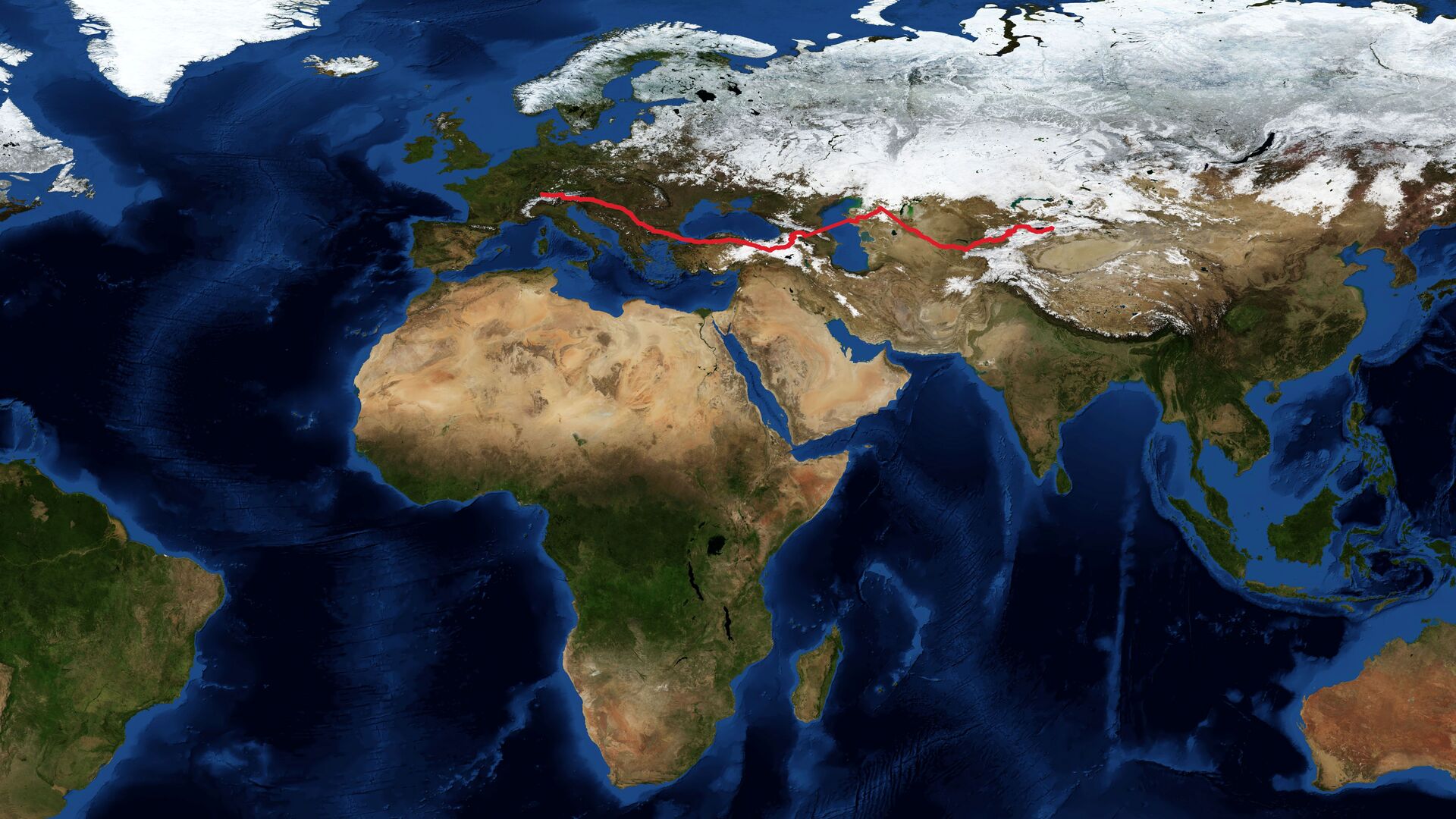
With skis strapped to his bike, Simon sets off from Zurich towards Kyrgyzstan at the beginning of winter on his gravel bike. An extraordinary winter bikepacking adventure spanning thousands of kilometres through cold temperatures, vast landscapes, and remote regions. In this interview, he shares how the idea came about and reflects on the challenges and memorable moments he experienced along the way.
How did the idea come about to ride to Kyrgyzstan in winter with skis in your luggage?
The first spark came a few years ago. I saw images of freeriding in Kyrgyzstan and was immediately fascinated by the landscape. Shortly after, I came across the Silk Road Mountain Race. From that point on, Kyrgyzstan was linked in my mind with two things that really appeal to me: skiing and cycling.
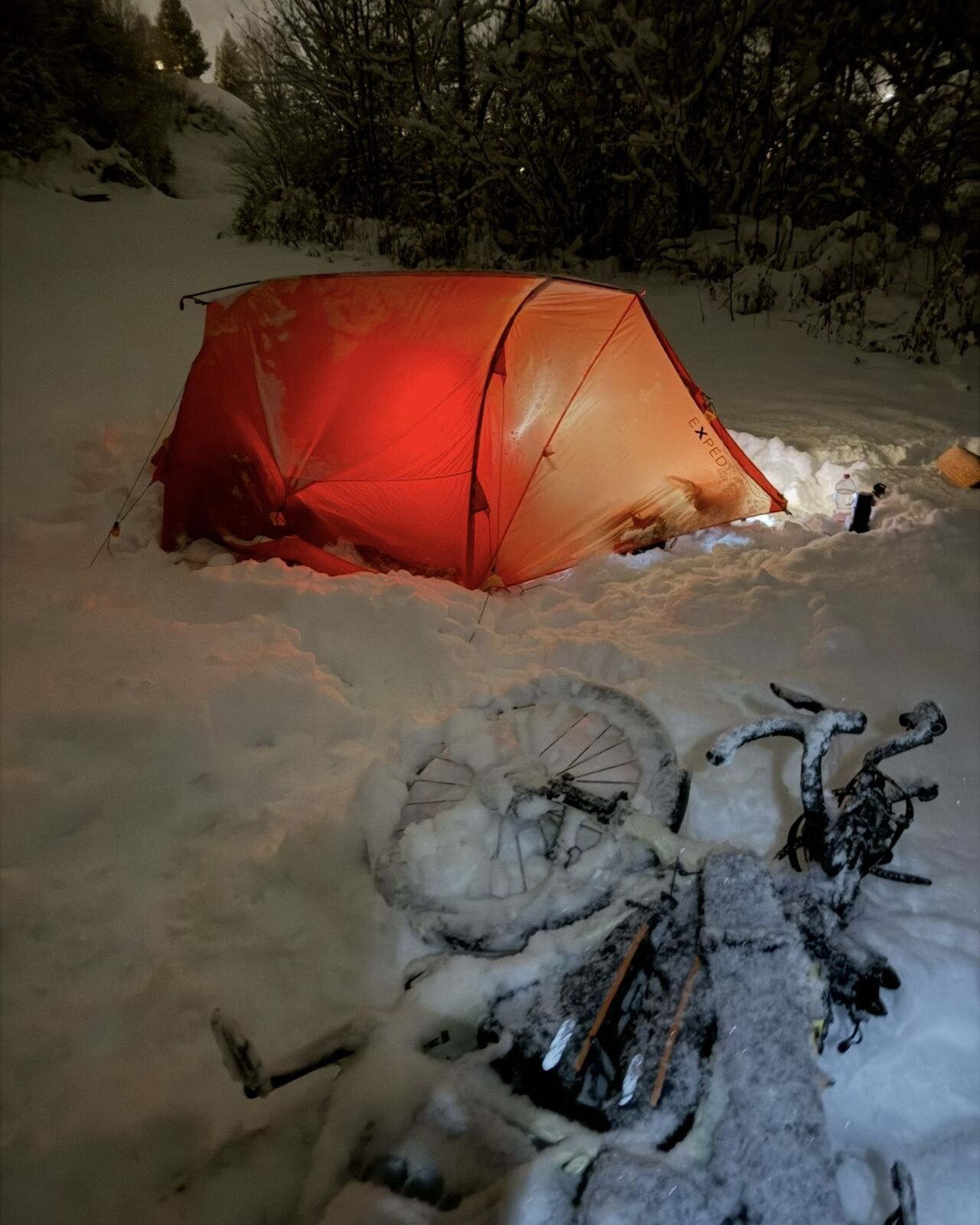
At first, I wanted to do the project together with a friend. The idea was simple: bike and ski in Kyrgyzstan. However, flying was not an option for him. So we turned it into a different kind of adventure and travelled to Norway by train, with our bikes along for the ride. In 50 days, we crossed the country from south to north, covering around 3,000 kilometres and spending 43 nights sleeping in a tent. That experience showed me how well cycling and skiing can be combined and how much is possible, even in winter.
Back in Zurich, back to everyday life, Kyrgyzstan kept coming back to my mind. I just could not let go of the idea. If Norway worked, why not take it a step further? That is how the plan came about to ride roughly 7,000 kilometres from Zurich to Kyrgyzstan in winter.
You were on the road for several months, carrying a lot of gear, riding long distances and dealing with temperatures well below freezing. Why was the GRID the right choice for this journey?
For several weeks, I was riding in temperatures of minus ten degrees and below and spent almost my entire daily life outdoors. Sleeping, cooking and riding the bike, in winter that quickly adds up in terms of equipment. Warm clothing, winter camping gear, a stove, camera, repair kit and of course the full ski setup with boots, avalanche shovel, probe and transceiver. With water and food, the total weight reached up to around 55 kilos depending on the section.
At the same time, I still wanted to stay efficient and be able to cover long distances. That is exactly where the GRID came in. Stable enough to handle heavy loads, yet light and fast. The bike itself only made up a small part of the total weight, and that balance was key.
The longest day was 301 kilometres, despite carrying all that weight. Loading a lightweight gravel bike in a way that it still rides stable and controlled is technically demanding. What impressed me most was how calm and reliable the GRID felt, even under that kind of load. I could still ride hands-free at times, which is definitely not something you would expect with that much weight.
Was there a moment along the way that will particularly stay with you?
There were so many memorable moments, but one really stands out, mainly because of the contrast. In Turkey, I had a serious cycling accident and ended up in hospital for quite some time with a neck injury. Afterwards, I could barely walk for five minutes. In that situation, continuing to believe in this project felt quite unreal. You start questioning everything and look for reasons why you are doing it in the first place.
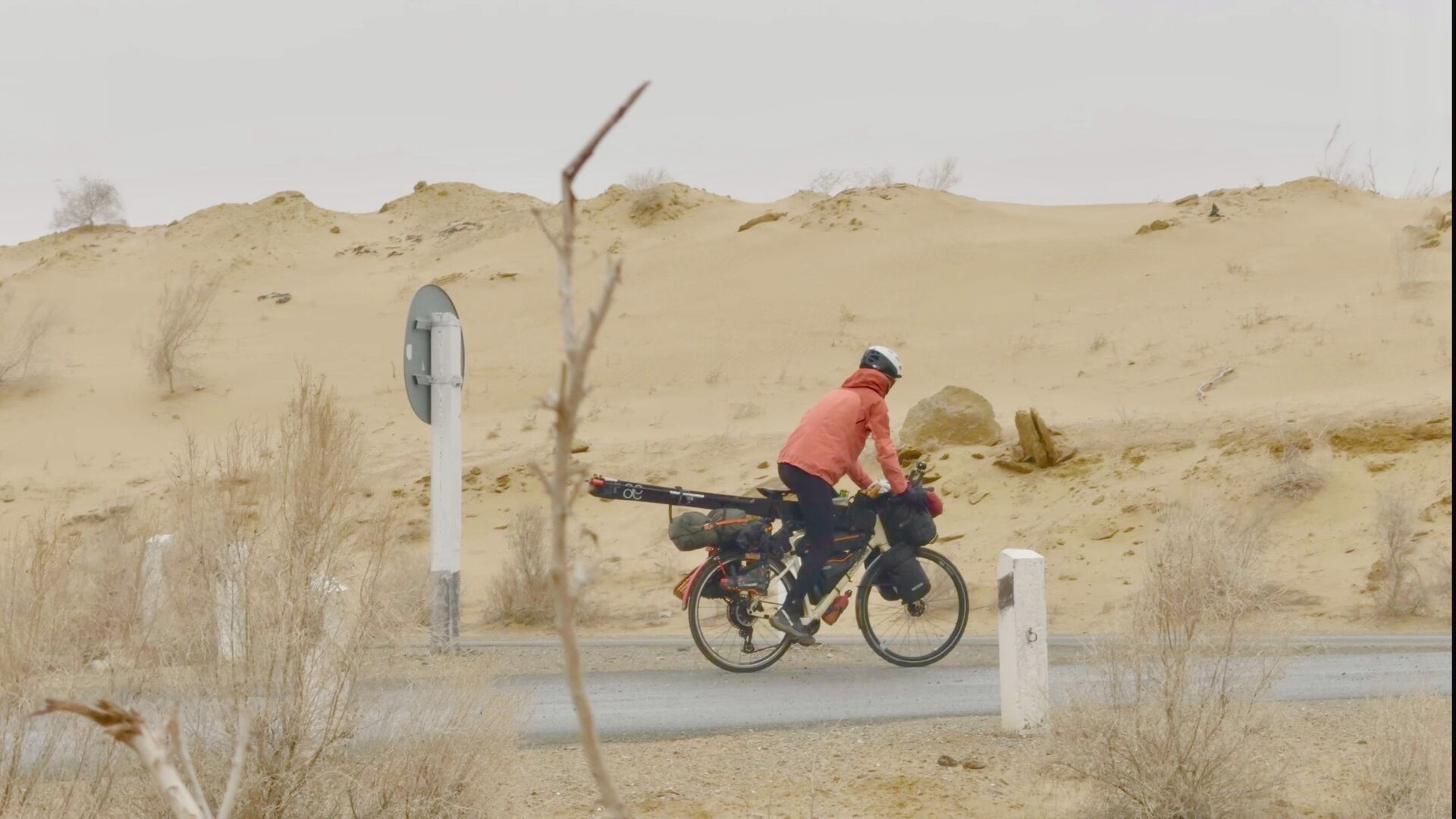
And then, just over a month later, I’m back on the bike, riding 300 kilometres in a single day through the desert in Uzbekistan. It felt completely surreal. I had already ridden several days of more than 200 kilometres before, but 300 kilometres, carrying all my gear and as part of a journey where I was also riding more than 100 kilometres on the days before and after, was on another level. Twelve hours on the bike, hardly any breaks, just constantly moving. At times, I could hardly believe what was happening myself.
I was riding on studded tyres, carrying skis on the bike, several litres of water and food for two days. Temperatures were just above freezing, right in the middle of a sand desert. My biggest concern was that my water might freeze and I would have to melt it again before I could drink it. And still, you just keep going, pushing on and trusting that everything will work out.
One moment in particular has stayed with me. After around 150 kilometres, I saw a few people standing by the road. I rode past them and exchanged a quick high five, but then realised they had actually been waiting for me. They were holding out a bottle of water. Out there, in the middle of nowhere, just sand, sky and road. I stopped straight away and spoke to them briefly. That encounter, in that place and in that situation, was simply unimaginable.
Which situation challenged you the most over those roughly 7,000 kilometres?
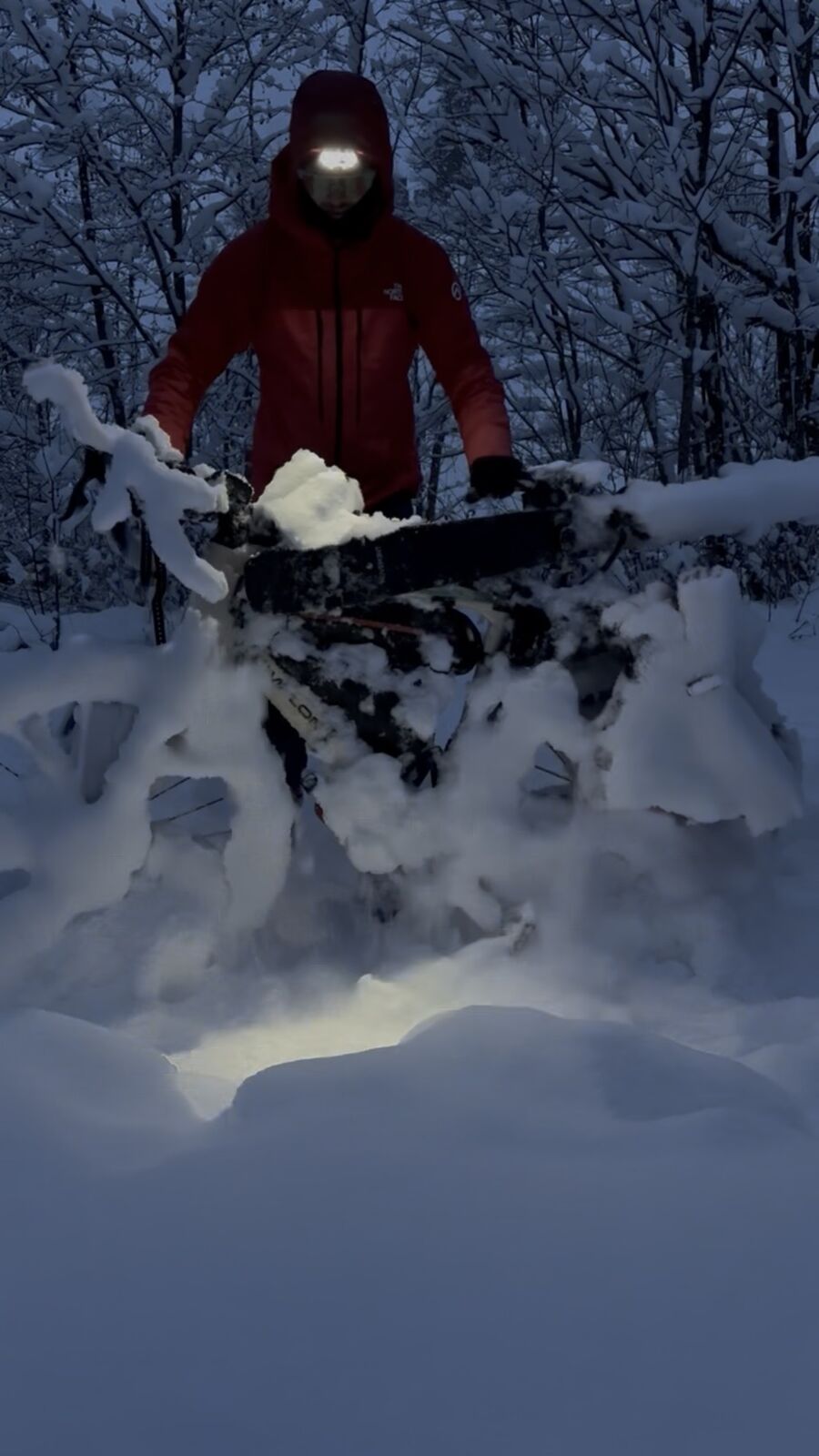
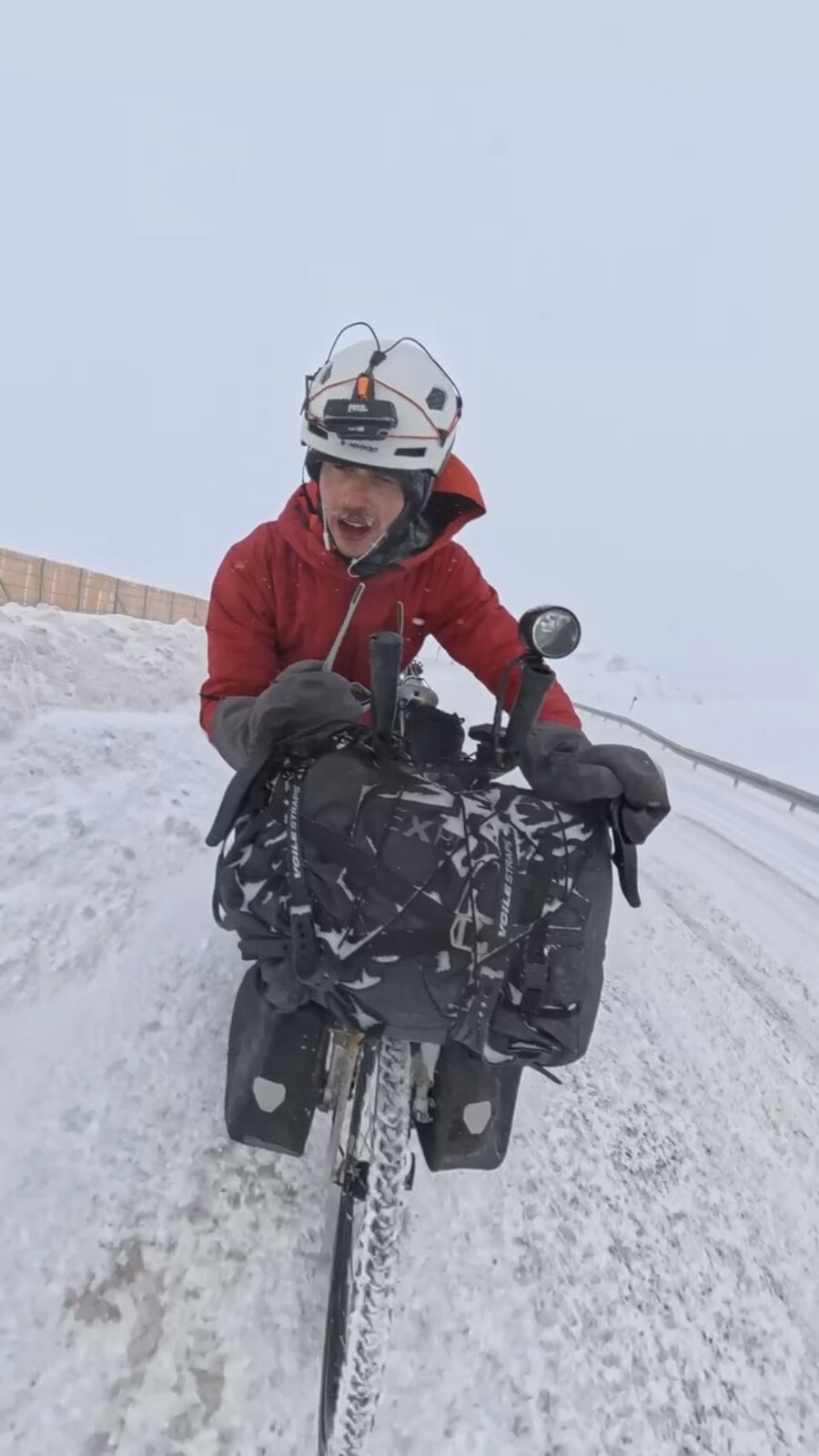
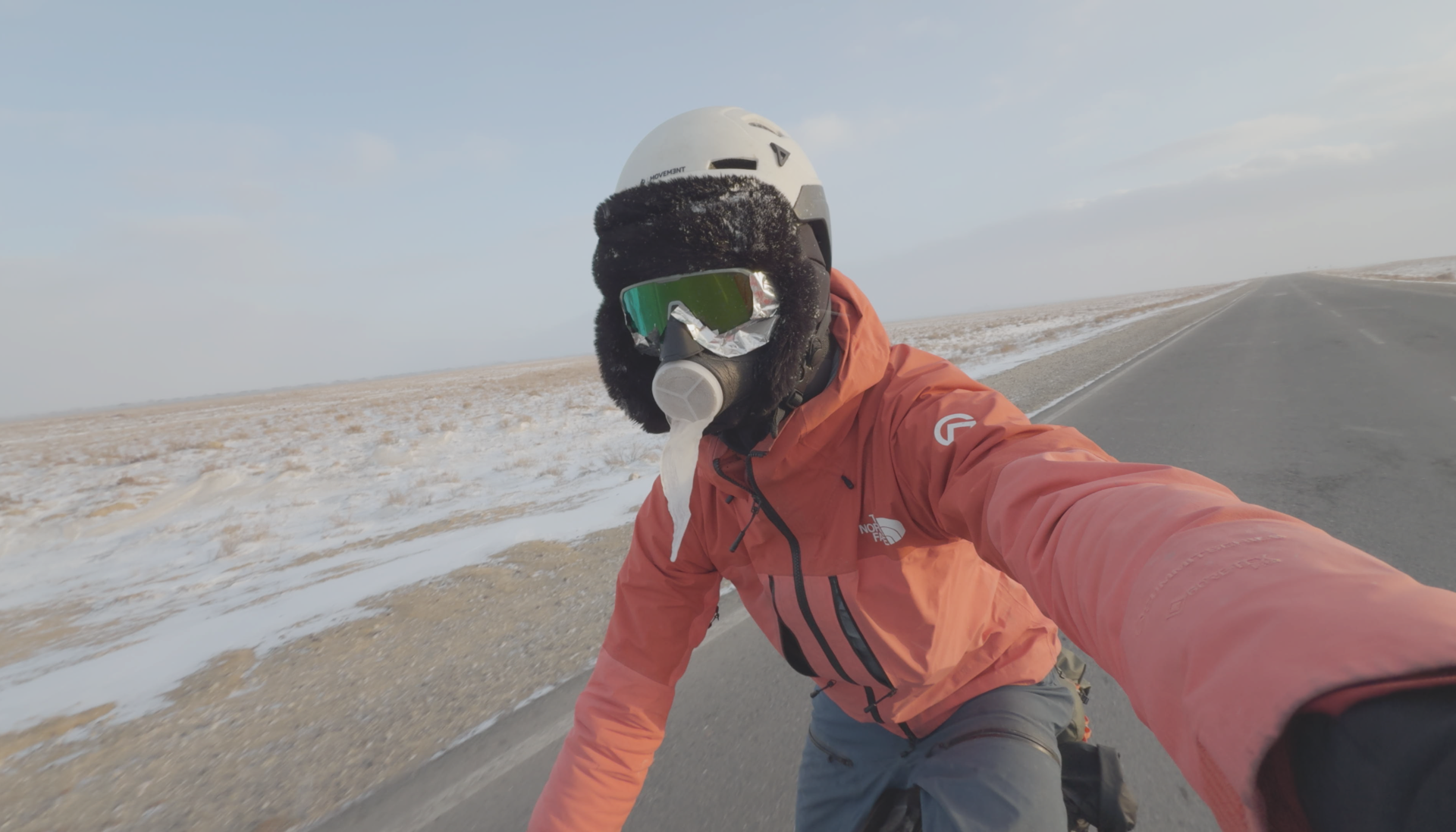
Once temperatures drop below minus 20 degrees, it gets really tough. It is easy to underestimate, because we tend to think of temperature as a linear scale. Minus 15 sounds like just ten degrees colder than minus five. But at minus 26, it feels completely different. A home freezer is around minus 16 degrees. And I was out riding for up to nine hours at minus 26. In Kazakhstan, that was especially intense. I had a breathing mask designed simply to humidify the air. My breath froze inside it, and I was producing around half a kilo of ice each day. Without that mask, I would not have managed those conditions.
Eating and drinking also become a real challenge at those temperatures. During those nine hours, I ate and drank once, and for the rest of the time I was more or less fasting and dreaming about what I would like to eat again. At the same time, the landscape and conditions are so unusual and impressive that you almost forget everything else. The cold, the hunger, the thirst. At times, it felt like being on another planet.
How did you prepare for winter camping in sub-zero temperatures and what helped you most along the way?
The experience from Norway helped me a lot. That was where I learned how to actually function in those kinds of temperatures. And like with most things, you learn from your mistakes. At some point, you have done almost everything wrong once, and the next time you are much more careful.
One situation really stuck with me. On a very cold day, I rode through a short stretch of wet road. A truck had spilled some water, which had not frozen yet. Shortly after, I stopped for a lunch break. When I tried to continue, my front wheel was completely frozen. The bearings, spokes, tyre and mudguard were all locked solid. Even with a lot of force, I could not move it. I did not want to risk breaking anything, so I had to stop for the day. I eventually found a house where I could thaw the bike and let it dry overnight.
That experience taught me something important. Frozen water or snow is usually not a problem. Even snow inside your bags is fine, as long as it stays frozen. The real challenge is liquid water and changing temperatures. That is where you really need to pay attention.
After so many kilometres through cold, gravel and long distances, what really matters in a bike for an adventure like this in the end?
In the end, a bike needs to do one thing above all: endure. Maintenance is almost impossible in those conditions, simply because it is often too cold. That is where high-quality components really make a difference. They keep working reliably even without constant maintenance. Especially in remote regions, that becomes crucial. In Uzbekistan, you cannot just pick up a new chain or spare parts.
Dealing with water and cold is another key factor. Liquid water is the biggest challenge. That is why hydraulic brakes proved to be a clear advantage, as there are no cables where water can get in and freeze. The same applies to the drivetrain. I was running a single chainring at the front and an electronic shifting system at the rear. It was actually the only electronic device that kept working reliably even at minus 25 degrees. The key is to keep moving and to shift through the gears regularly so nothing freezes.
Then there are the road conditions. In many regions, roads are not salted or treated in winter, so they can be completely icy. Studded tyres are essential in those situations, even though they do wear down over time. Towards the end of the trip, the studs started to push through from the inside and I ended up with multiple punctures at once. That required some improvisation to keep going.
In the end, it comes down to a balance of stability, reliability and efficiency. That is what made the difference for me.
Simon's gravel bike for the journey to Kyrgyzstan
SIMPLON GRID (frame size L, 57 cm – stack 618 mm, reach 408 mm)
- Wheelset: DT Swiss G1800 gravel wheelset with DT Swiss hub dynamo and DT Swiss 370 hub
- Drivetrain: SRAM Rival eTap AXS 12-speed (38T chainring, 10–52T cassette) with SRAM Rival 1 Wide (D1) crankset, 175 mm
- Brakes: SRAM Rival eTap AXS HRD FM hydraulic disc brakes
- Cockpit: SIMPLON carbon handlebar with tapered profile (42 cm width), SIMPLON stem 90 mm (-12°), and carbon seatpost
- Saddle: Selle Italia Boost X3
- Pedals: HT Components Nylon PA03A platform pedals
- Tyres: Schwalbe Marathon Winter Plus
- Lighting: Busch+Müller IQ-X
- Luggage & Accessories: Racktime Standit 2.0 rear rack
Luggage setup: Compared to his Norway expedition, Simon significantly refined his luggage system. An alpine backpack served as a bikepacking handlebar bag, complemented by lightweight bags and numerous straps. His ski boots were strapped directly to the rear rack without any additional mounting system. Apart from the luggage setup, the bike remained virtually unchanged from the Norway trip.