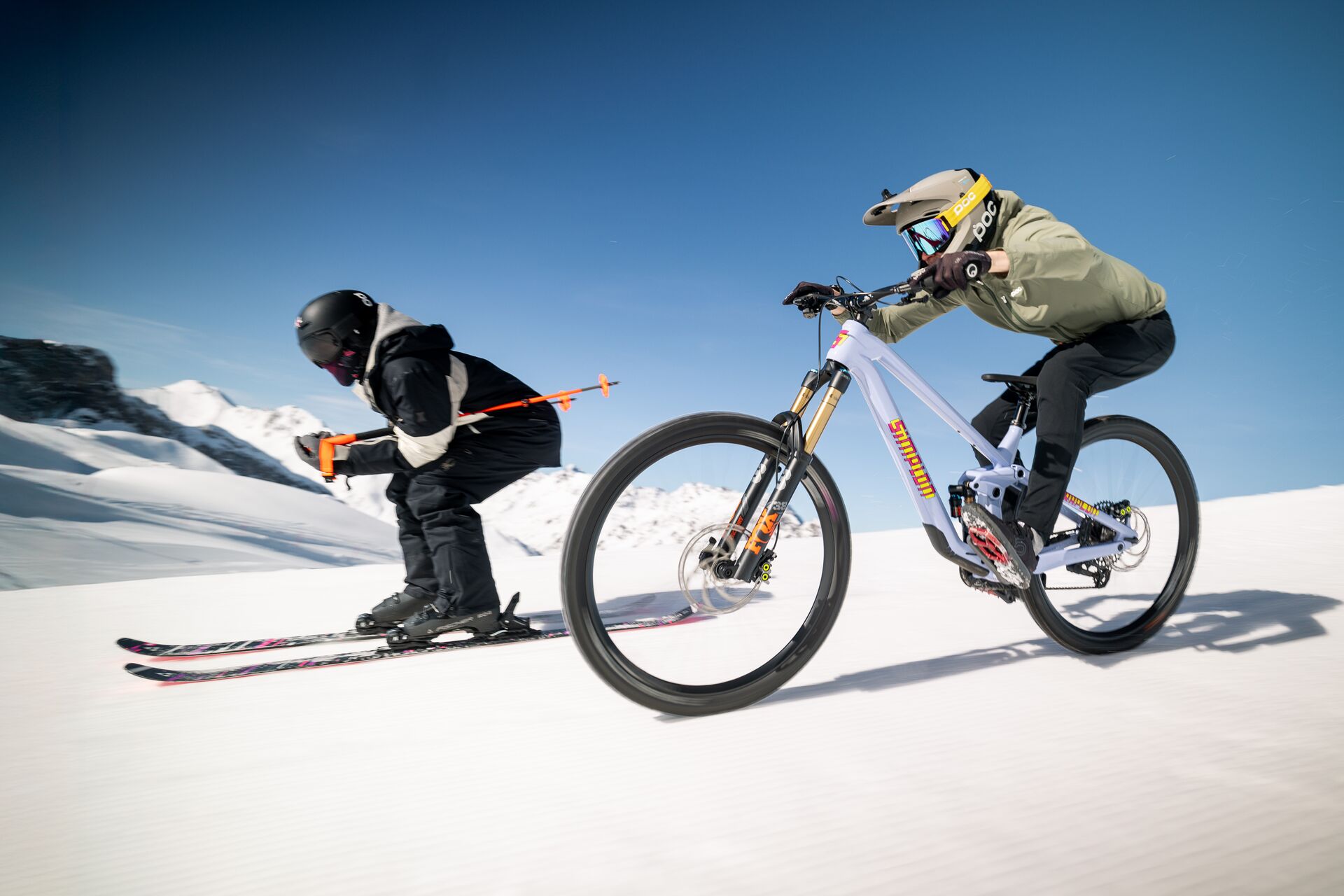
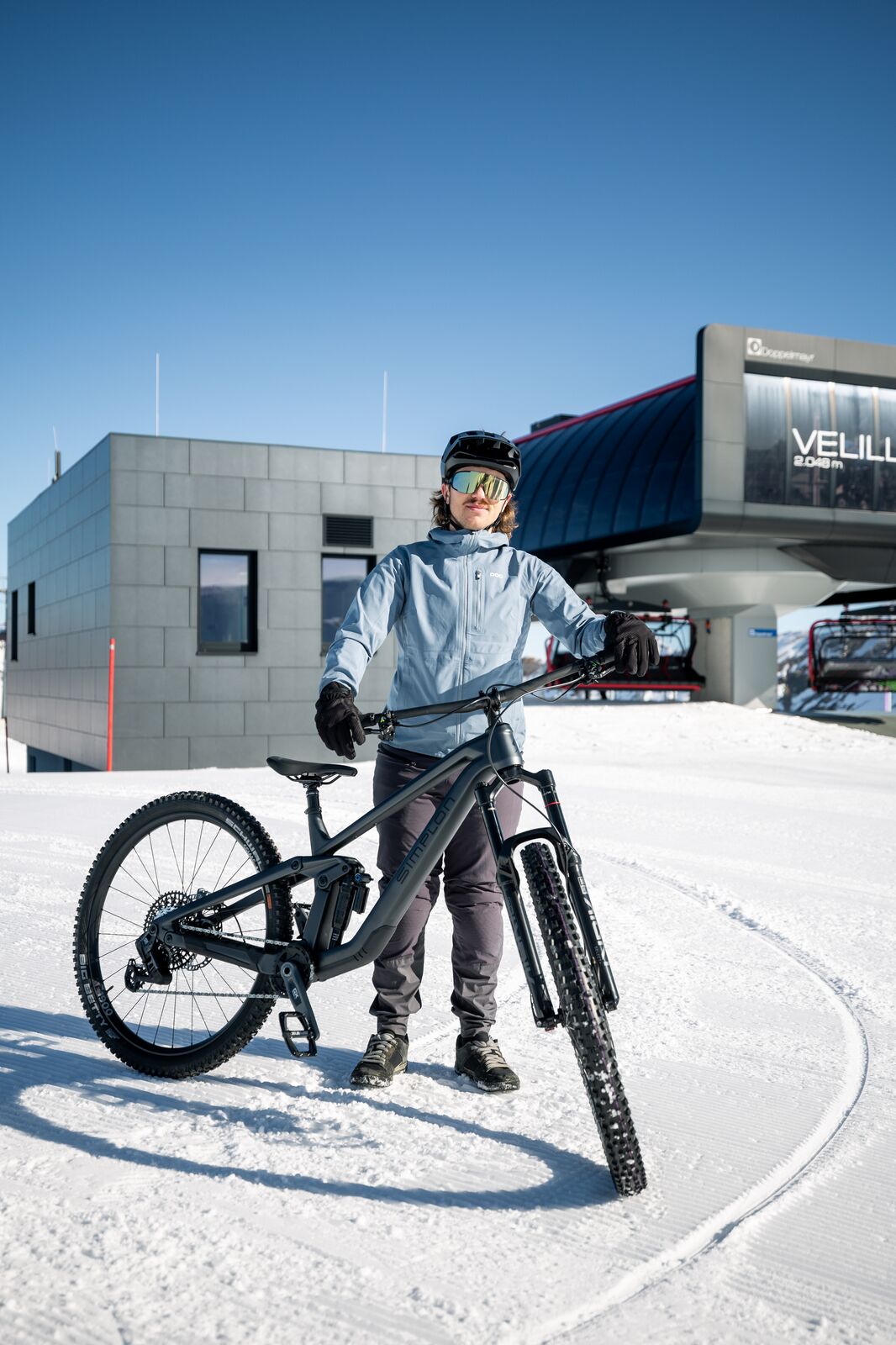
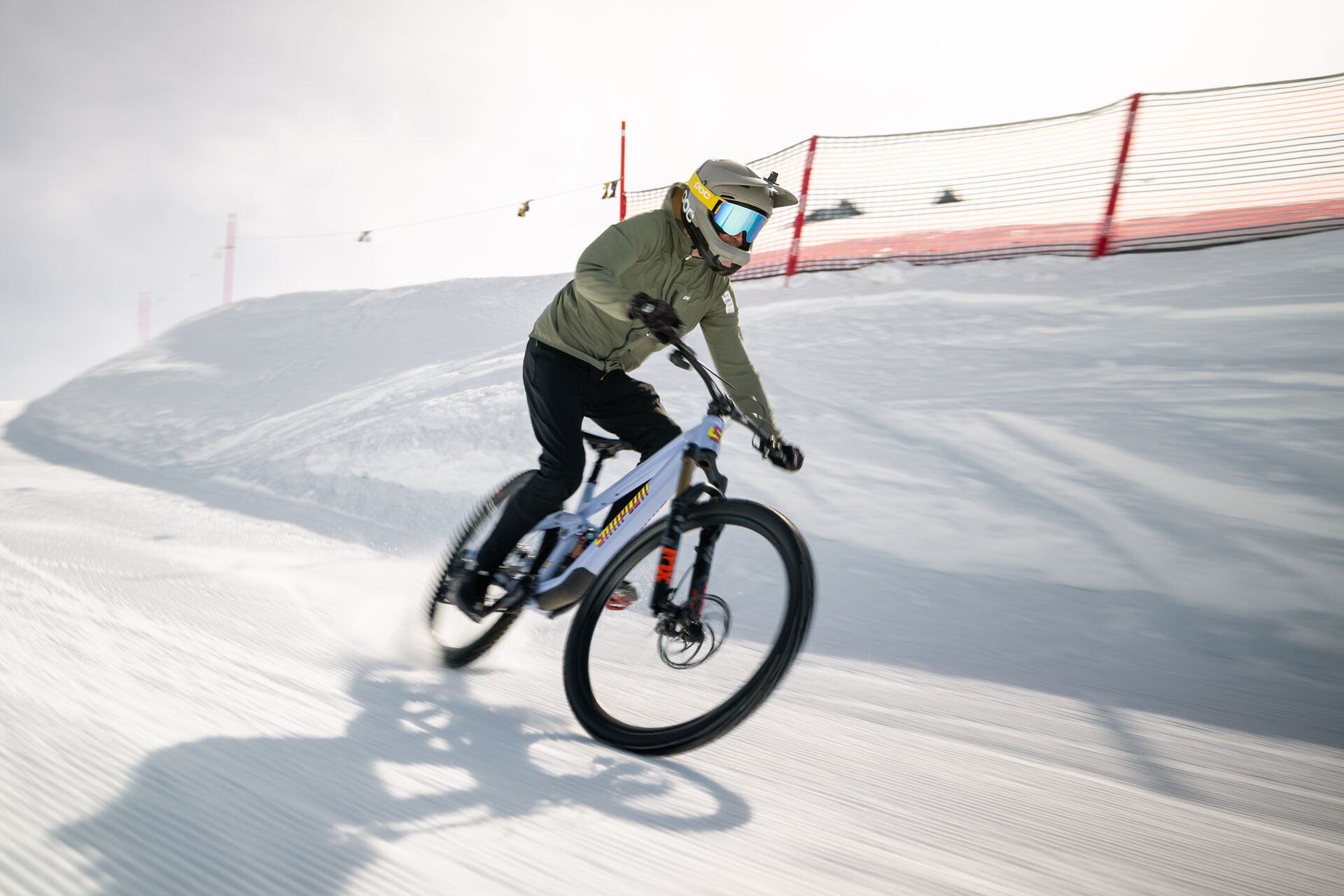
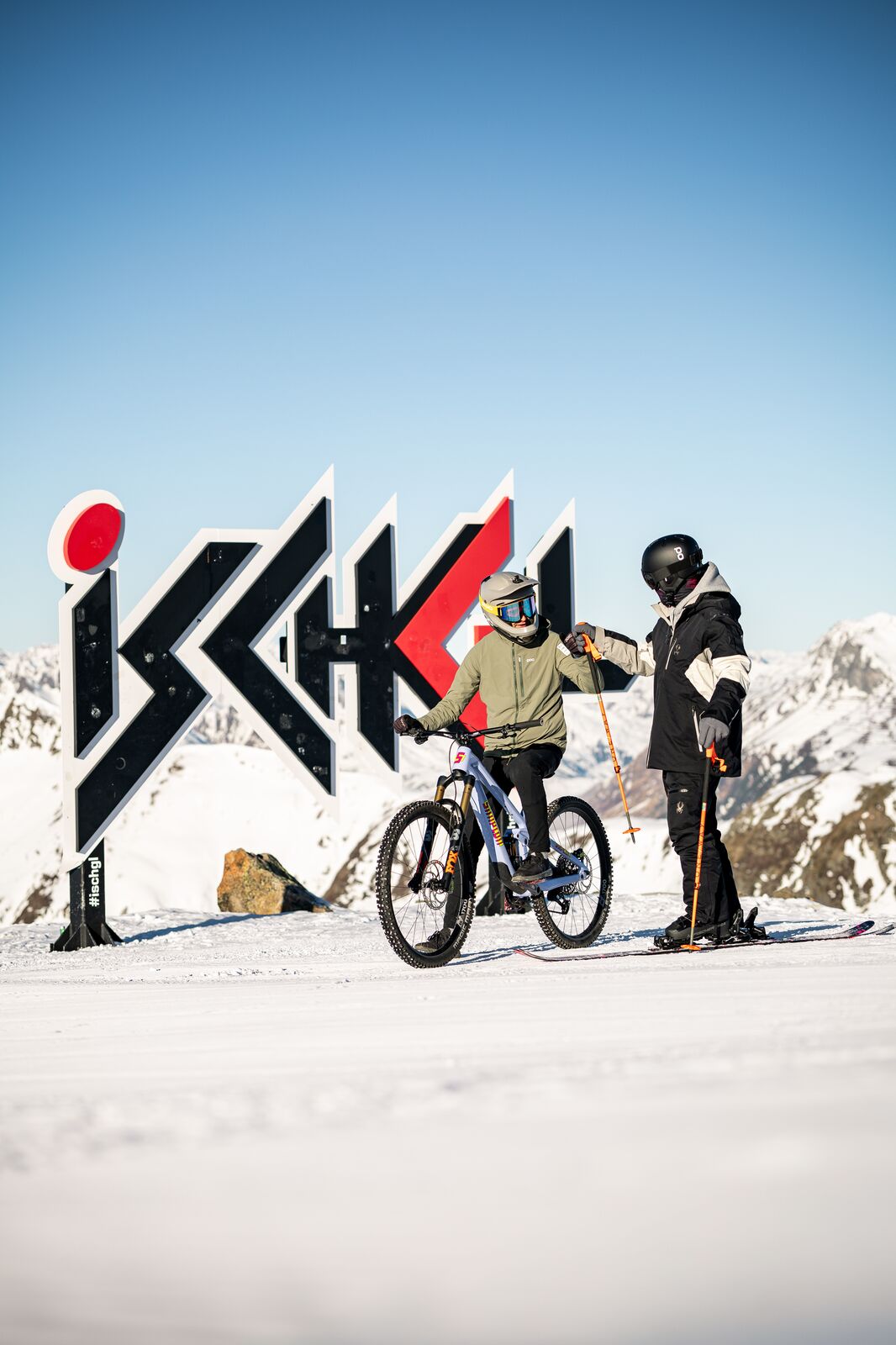
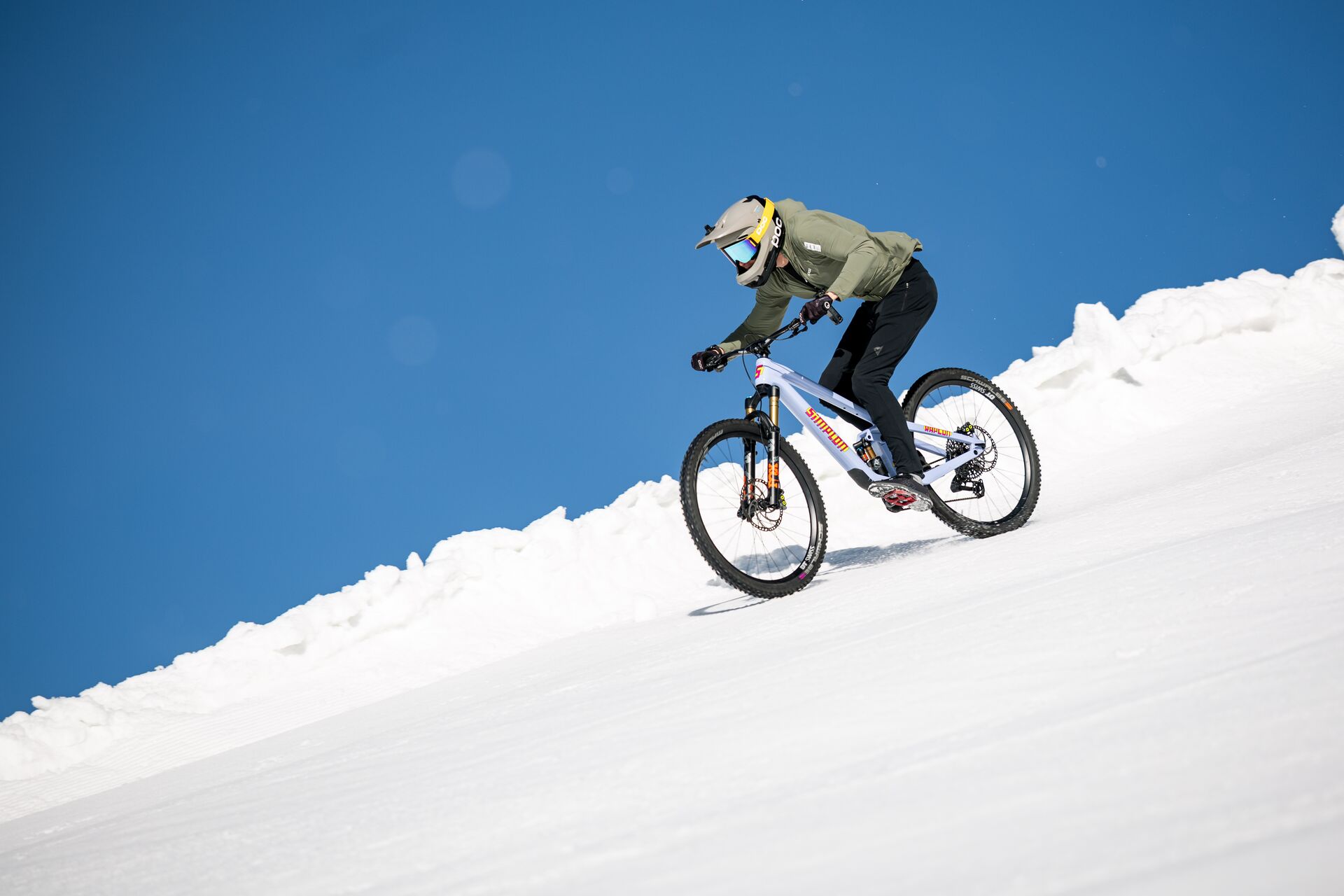
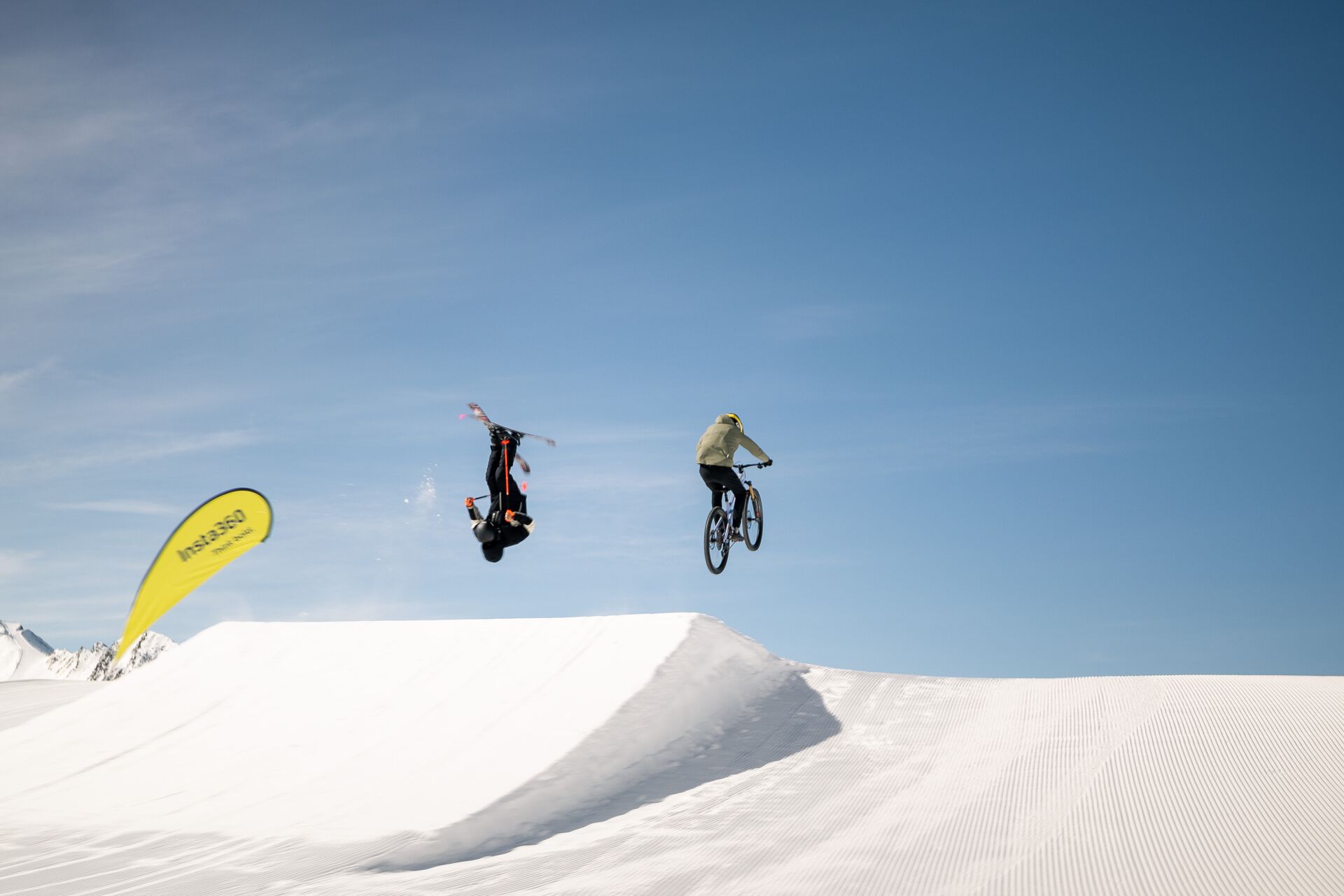
Many riders wonder: Is it even possible to bike in winter? The short answer: Absolutely! With the right setup, some adjustments to your riding technique, and a healthy dose of caution, riding in the snow can become your next winter adventure.
Biking in the snow: What you need to know
In winter, the ground plays by its own rules: snow, ice, slush, and frozen ruts demand everything from rider and bike alike. Particularly tricky: the fine line between too hard and too soft. If the snow is icy and slick, studded tires may be your only hope for traction. If it’s too soft, you’ll sink in—making it hard to steer, balance, or climb.
What always helps: a mountain bike or e-MTB with a stable all-mountain or trail geometry. That’s your best bet for control, grip, and winter fun. Here are our top winter biking tips:
Setup tips:
- Lower tire pressure: ~0.8–1.2 bar (depending on tire width) → increases surface contact and grip
- Tire width: depends on conditions! (see next section)
- Keep e-bike battery warm: Store at room temperature if possible—cold reduces range
- Post-ride care: Rinse off salty slush, re-oil the chain
Riding technique:
- Go slower for better control
- Avoid sudden braking or steering
- Look ahead and choose smooth lines
- Uphill: Shift your weight forward
- Downhill: Stay centered or slightly back
Clothing: dress in layers:
- Warm, windproof jacket & pants
- High-quality winter gloves
- Waterproof shoes or overshoes
- Sport sunglasses to prevent glare & spray
- Don’t forget your helmet!
Can I use my regular MTB for biking in the snow?
Yes—ideally with wide tires, grippy tread, and reduced air pressure. Full-suspension or trail bikes are best suited for winter conditions.
What kind of trails are suitable for cycling in the snow?
Ideal: Forest roads, packed snow trails, and groomed winter hiking paths (where allowed). Avoid deep powder and icy tracks—or switch to studded tires.
The tire width debate
Wide tires are often seen as essential for winter biking—after all, they provide more contact surface and thus more grip. But it's not quite that simple. If you're riding in snowy conditions, tire choice should match the terrain.
In soft, deep snow, wide or even fatbike tires with low air pressure (e.g. 0.8–1.2 bar) clearly have the edge. They prevent sinking and provide more floatation.
But on hard-packed snow or groomed trails, narrower tires can actually perform better. Just like in car rally racing, a narrower tire "cuts" through the snow more easily and reaches a firmer layer underneath—where it can grip more effectively.
Bottom line: Wider isn’t always better. Choose based on snow conditions, weather, and your riding style.